
Kosovo remains central to Balkan politics because questions of political status, Serbia–Kosovo relations, local governance, and international mediation overlap.
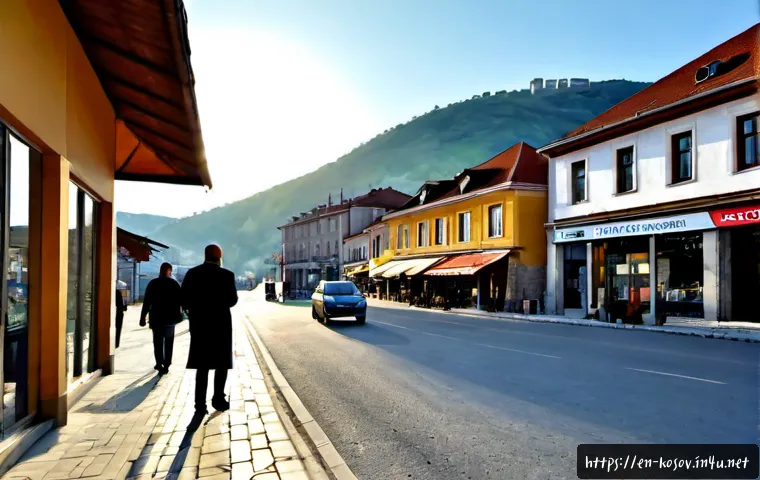
A tense political headline does not automatically mean an immediate travel, trade, or security disruption. For most readers, broad news coverage is enough to understand the context, but organizations with staff, routes, contracts, or investments may need more structured regional risk analysis.
The useful distinction is between a long-running political dispute and a verified operational change. Compare sources by their update frequency, local reporting capacity, methodology, and ability to explain practical consequences.
Always verify current border, transport, diplomatic, and security information before making a decision.
At a Glance
- Kosovo’s political role is shaped by unresolved status questions, relations with Serbia, and the governance of diverse communities.
- Political tension and immediate disruption are different things; a statement or local dispute may not change travel, trade, or business conditions.
- Use layered sources: general news for context, official notices for operational changes, and specialist advice for high-exposure decisions.
| What is happening? | Who may be affected? | Business or travel impact | When to seek specialist advice |
|---|---|---|---|
| Status, recognition, or dialogue-related statements | Researchers, diplomats, NGOs, and organizations with regional interests | Usually indirect unless followed by a confirmed policy or operational change | When a decision depends on legal recognition, public-sector engagement, or cross-border planning |
| Local governance or community-related disputes | Residents, municipal partners, local suppliers, and field teams | May affect access, public services, local schedules, or project coordination | When operations depend on a particular municipality or local counterpart |
| Security-related incidents or transport concerns | Travelers, drivers, logistics teams, and on-the-ground staff | Potentially immediate if routes, access points, or movement conditions change | When personnel safety, freight timing, or contingency planning is involved |
| Diplomatic or economic signals | Investors, exporters, importers, and regional service providers | May influence expectations, contracts, documentation, or market confidence | When entering a contract, making an investment, or assessing regulatory exposure |
The Short Answer: Why Kosovo Remains Central to Balkan Politics
Kosovo matters in Balkan politics because it sits at the intersection of political status, bilateral relations, local administration, security concerns, and international involvement. These layers often appear in the same news cycle, which can make a local issue look larger—or more immediate—than it is. The practical question is not only what happened, but also whether it changes conditions for people, transport, commerce, or institutional cooperation.
Kosovo’s unresolved status and competing political narratives
Political discussions about Kosovo commonly involve different interpretations of status, sovereignty, recognition, representation, and institutional legitimacy. Those differences shape how governments, political parties, communities, and outside actors describe the same event. For readers, the key is to separate a political narrative from a confirmed administrative or legal change. A forceful public statement may be important context, but it is not automatically a new rule, agreement, or operational restriction.
Why local events can draw regional and international attention
Events involving municipalities, community governance, public institutions, border-related processes, or demonstrations can attract attention well beyond their immediate location. They may become symbols within wider Serbia–Kosovo relations or broader Southeast European diplomacy. That does not mean every event will escalate. Look for concrete indicators: official instructions, confirmed service changes, verified transport disruptions, or clearly stated measures affecting movement and operations.
Separating political tension from immediate safety or business disruption
A useful first filter is simple: ask whether the report describes rhetoric, a policy decision, an incident, or a confirmed operational impact. Rhetoric can influence the political climate. A policy decision may matter later. An incident may be geographically limited. Operational impact is the category that matters most to travelers and businesses because it can affect routes, schedules, documents, staffing, or supplier commitments.
The Main Political Actors and What They Want
Understanding Kosovo politics requires more than following one capital or one media outlet. Different actors may focus on domestic governance, political legitimacy, community protections, dialogue, stability, or regional cooperation. Their stated priorities can overlap while their preferred solutions remain different.
Kosovo’s institutions and domestic political priorities
Kosovo’s institutions must address domestic governance alongside external political pressures. For practical analysis, track whether a development concerns public administration, municipal coordination, legal procedures, public services, or political messaging. Organizations working locally should avoid assuming that national-level discussion explains every municipal issue. Local implementation, institutional capacity, and community relationships can matter just as much.
Serbia’s position and the significance of northern Kosovo
Serbia–Kosovo relations remain a central lens for interpreting developments, particularly where local governance and community concerns receive heightened attention. Northern Kosovo is often discussed in political and security reporting, but broad labels can hide local differences. A responsible assessment asks which location, which institution, which activity, and which timeframe are actually involved before drawing conclusions about wider regional conditions.
The role of the European Union, the United States, NATO, and neighboring states
The European Union, the United States, NATO, and neighboring states may all be relevant to diplomacy, dialogue, security discussions, or regional stability. Their involvement should not be treated as proof that a new agreement, commitment, or security measure is in effect. Check the latest official communication and distinguish mediation, public messaging, and confirmed implementation. Current positions of governments and mediators can change and require direct verification.
A Practical Comparison Framework for Following Developments
A reliable Balkan political-risk process compares several types of evidence rather than reacting to the loudest headline. The framework below helps readers identify what kind of development they are seeing and what level of research is appropriate.
Status and recognition issues versus day-to-day governance disputes
Status and recognition issues are strategic and long-term. They can shape diplomacy, regional cooperation, and institutional relationships. Day-to-day governance disputes are often more immediate for residents and organizations, covering practical coordination, administrative procedures, public services, or municipal engagement. Both matter, but they create different kinds of risk.
Security signals, diplomatic signals, and economic signals
Security signals include verified access limitations, incidents affecting movement, or official safety-related guidance. Diplomatic signals include talks, statements, mediation activity, and changes in public tone. Economic signals may include documentation questions, contract uncertainty, supplier concerns, or logistics planning issues. Do not collapse these into one category. A diplomatic disagreement may have no immediate effect on a delivery route, while a localized transport issue may matter greatly without changing the broader political picture.
When free news coverage is sufficient and when specialist political-risk analysis adds value
Free reporting is usually sufficient for background research, classroom work, and general awareness. It is less sufficient when a decision depends on a specific municipality, a cross-border route, an employee movement plan, a contract, or a legal interpretation. In those cases, political-risk analysis, travel security briefings, local legal counsel, or business intelligence tools may add value by clarifying scope, timing, source quality, and scenario planning.
Cross-Border Impacts: Travel, Trade, Investment, and Operations
Cross-border exposure should be assessed through practical dependencies, not only political headlines. A traveler may need current entry and transport information. A business may need to review documents, suppliers, routes, and contractual responsibilities. An NGO may need location-specific communication and contingency procedures.
Border procedures, transport planning, and documentation checks
Before travel or freight movement, verify current requirements through relevant official channels and the transport provider involved. Check the documentation needed for the specific route and activity, not merely general regional guidance. Conditions involving borders, visa rules, transport routes, or local security can change, so historical knowledge should not be treated as current operational advice.
Supplier, logistics, and contract considerations for regional businesses

Businesses should identify where a political or administrative disruption would create a dependency: a single route, a local supplier, an approval process, or a person who must travel. Contracts should be reviewed with attention to documentation, delivery responsibilities, communication procedures, and alternative arrangements. Where exposure is material, seek qualified legal or commercial advice rather than relying on a general geopolitical summary.
Due diligence questions for investors, NGOs, and international teams
Ask practical questions: Does the project depend on access to a specific area? Are local partners able to communicate changes quickly? Is there a verified process for checking transport, documentation, and staff movement? Are political developments likely to affect the project directly, or are they mainly background context? A strong due-diligence process documents what is known, what remains uncertain, and who will verify updates.
Common Mistakes When Interpreting Balkan Political News
Political reporting from the Balkans can be fast-moving and emotionally framed. The most useful response is not to dismiss concerns, but to test each claim against location, source, timing, and operational relevance.
Assuming every incident will escalate into a wider conflict
One incident can be serious without representing a region-wide crisis. Avoid predictions based only on dramatic language or social media amplification. Instead, identify whether there is a confirmed change in access, services, official policy, or security guidance. This approach protects against both complacency and unnecessary alarm.
Relying on a single national media perspective
National media perspectives can provide valuable reporting, but they may emphasize different political narratives. Compare reporting across more than one credible source and look for direct statements, documents, or operational notices where possible. For sensitive decisions, include locally informed analysis and make the source methodology part of the assessment.
Confusing diplomatic statements with binding policy changes
Statements, meetings, and dialogue announcements may signal intent, disagreement, or diplomatic pressure. They do not automatically establish a binding measure or a completed implementation step. Confirm whether there is a published decision, a stated effective date, a responsible institution, and a clear effect on travelers, businesses, or local operations.
Selection Criteria and Comparison Summary
Choose support based on the decision you need to make. Compare update frequency, local coverage, language capability, methodology, and the ability to provide practical support. General news alerts may fit background monitoring; academic research can support context; local legal counsel may be appropriate for legal or regulatory questions; and political-risk or travel-security services may be useful for active operations. Compare regional risk-monitoring options based on update frequency, local coverage, methodology, and support needs. For current conditions and service details, check the relevant provider or official information page directly.
Choosing between news alerts, academic research, local legal counsel, and political-risk services
Use news alerts for speed, academic research for historical and analytical depth, local counsel for jurisdiction-specific interpretation, and specialist advisory services for operational planning. No single source type replaces the others. The right choice depends on whether the decision is informational, legal, safety-related, commercial, or time-sensitive.
Comparing update frequency, geographic coverage, language capability, and methodology
Ask whether the service explains how it verifies claims, covers the locations relevant to your work, and distinguishes analysis from confirmed facts. Language capacity matters when local reporting or documents require interpretation. Also ask whether the provider can explain uncertainty instead of presenting a simple risk label without context.
A final checklist for travelers, organizations, and researchers
Confirm the exact location involved; verify current operational information; distinguish a political statement from an implemented measure; identify exposure to routes, staff, suppliers, or partners; and record who is responsible for rechecking updates. These steps are more useful than treating “the Balkans” as one uniform risk environment.
Final Thoughts
Kosovo’s place in Balkan politics is important because political status, local governance, bilateral relations, and international engagement can intersect. The best interpretation starts with precision: what happened, where did it happen, and what has actually changed? For travelers and organizations, verified operational information matters more than broad political speculation. When the decision carries legal, safety, or financial consequences, use advice appropriate to that specific exposure.
Useful Information
1. Keep a distinction between long-term political issues and immediate operational conditions.
2. Verify current travel, border, and transport details before acting.
3. Compare more than one credible reporting perspective.
4. Treat social media as a lead to verify, not as final evidence.
5. Use location-specific information for municipal, route, and local-partner decisions.
Important Notes
This is a general guide, not a current security assessment, legal opinion, travel recommendation, or investment recommendation. The status of dialogue commitments, diplomatic recognition, border procedures, security conditions, sanctions, visa rules, and institutional positions may change. Verify current information through appropriate official, legal, security, transport, or professional advisory sources before making a travel, business, or operational decision.
Frequently Asked Questions
Q1. Is Kosovo safe for travelers and business visitors?
A1. Safety and operational conditions should be assessed using current, location-specific information. General political tension does not by itself establish conditions for a particular municipality, route, hotel area, or business visit. Check current official guidance, transport information, and any relevant employer or security procedures before travel.
Q2. Why do Kosovo and Serbia remain politically divided?
A2. Their relationship involves unresolved questions of political status, recognition, governance, representation, and competing national narratives. These issues are long-running and can influence diplomacy as well as local political developments. Current dialogue positions and commitments should be verified through up-to-date sources.
Q3. When is it worth paying for a Balkan political-risk or travel-security briefing?
A3. Specialist support may be worth considering when a decision involves staff movement, a specific route, local operations, a contract, regulatory exposure, investment, or a sensitive public-facing project. Compare regional risk-monitoring options based on update frequency, local coverage, methodology, and support needs.